
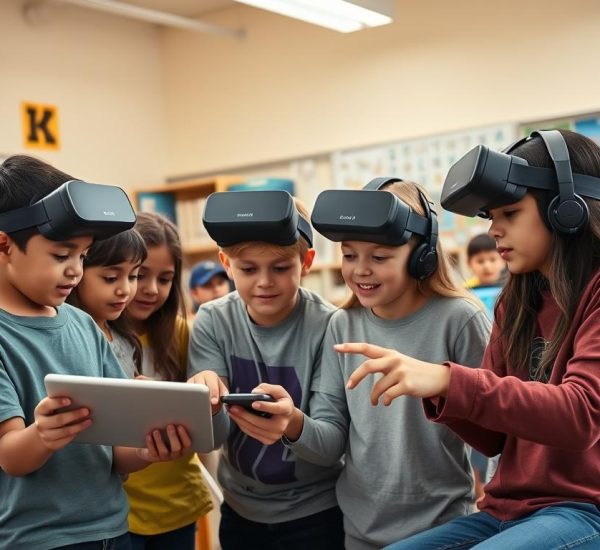
A bored classroom has a sound of its own: pencils tapping, chairs shifting, eyes drifting toward the clock. Students may be sitting still, but their attention has already left the room. That is why Educational Game Tips matter for teachers, tutors, homeschool parents, and school support teams across the USA who want learning to feel less like a forced march and more like a challenge worth accepting. Games do not magically fix weak lessons, but they can turn passive listening into active thinking when they are built with care. A good learning game gives students a reason to try, fail, adjust, and try again without feeling exposed. It also gives adults a clearer view of what students understand before a test reveals the damage too late. Schools that share classroom resources, parent updates, or local education stories through platforms such as community-focused publishing networks can also help families see that learning through play is not a gimmick. It is a practical way to bring energy back into schoolwork that too often feels distant from real student life.
Educational Game Tips That Make Learning Feel Worth the Effort
Students can smell fake fun from across the room. A worksheet with points slapped on top is still a worksheet, and most kids know it before the first round begins. The strongest classroom learning games start with a learning goal that deserves attention, then wrap that goal in choice, movement, pressure, humor, or teamwork. The game serves the lesson, not the other way around.
Classroom learning games that start with a clear academic target
A strong game begins with one skill, not a pile of standards. A fifth-grade teacher in Ohio might want students to practice decimal comparison, so she builds a card game where each team races to create the greatest number from drawn digits. The fun comes from the competition, but the thinking stays tied to place value.
That kind of focus matters because students need to know what their brains are actually working on. When classroom learning games try to teach vocabulary, teamwork, math fluency, reading stamina, and test strategy all at once, the room gets noisy while the learning gets thin. Pick the target first, then design the play around it.
Good teachers also stop the game before it drifts. Ten sharp minutes can beat thirty loose ones. Students remember the feeling of quick progress, and you get cleaner evidence of who needs help next.
Student participation improves when the rules are easy to enter
A game should not need a long speech before students can begin. Clear rules lower the fear of looking lost, which matters in mixed-ability classrooms where some students already feel behind. When students understand the task in the first minute, student participation rises because the barrier to entry stays low.
The best rule sets are almost boring on purpose. Match the term to the definition. Build the strongest argument. Solve and steal a point. Defend your answer. Those simple structures leave room for deeper thinking because students are not wasting attention decoding the game itself.
One smart move is to run a practice round that does not count. Students relax when the first mistake has no penalty. That small design choice can pull quiet kids into the action before louder classmates take over the room.
Building Learning Through Play Without Losing Classroom Control
Energy is useful only when it has a container. Many teachers avoid games because they picture shouting, side conversations, and one student arguing about points while the lesson falls apart. That fear is fair. Learning through play works best when the teacher designs boundaries as carefully as the activity.
Game-based learning needs structure before excitement
Excitement should never arrive before expectations. Before students play, they need to know how voices should sound, how teams will ask questions, what counts as evidence, and what happens when a group gets stuck. Game-based learning feels loose to students, but behind the scenes it needs tight planning.
A middle school science teacher might run a “mystery lab” where groups identify an unknown substance through clues. The room feels alive, but each team has assigned roles: recorder, materials manager, evidence speaker, and timekeeper. Students get movement and choice, while the teacher keeps the task from sliding into chaos.
The counterintuitive part is that more freedom often requires more structure. Students can take risks when they know the fence lines. Without those lines, confident students dominate and hesitant students disappear.
Small rewards beat big prizes in classroom learning games
Big prizes can poison a learning game faster than a bad rule. Once the reward feels too large, students start chasing the prize instead of the skill. Small rewards keep classroom learning games light: a choice of review question, a team shoutout, a silly badge, or the right to challenge the teacher in a final round.
The reward should mark effort, strategy, or improvement, not raw speed alone. Speed-based games often flatter students who already know the material while making others feel slow in public. That is a lousy trade.
A better system lets teams earn points for explaining reasoning, correcting an error, or helping a peer understand the move. The room still gets competitive, but the competition points toward learning instead of ego.
Designing Games That Include Every Type of Learner
Students do not enter a game from the same starting line. Some love public competition. Some freeze when attention turns toward them. Some need movement to think. Others need quiet before they answer. Strong game design respects those differences without turning the lesson into eight separate activities.
Student participation should not depend on being loud
The loudest students are not always the most engaged. They are often the most visible. Real student participation includes the quiet student who writes the best clue, the English learner who points out a pattern, and the student with anxiety who contributes through a team role before speaking to the class.
One useful approach is to build private thinking time into public games. Before teams answer, every student writes a response, sketches a model, or chooses a card. That pause changes the room. Students bring something to the group instead of waiting for the fastest voice to decide.
Teachers can also rotate roles across rounds. A student who acts as scorekeeper in round one might become evidence speaker in round three. The rotation sends a message: everyone gets access to the center, but nobody has to live there the whole time.
Learning through play helps students recover from mistakes
Games make failure feel smaller when the tone is right. A wrong answer in a lecture can feel final, especially for students who already doubt themselves. In learning through play, a missed move becomes part of the round. Students adjust, laugh, rethink, and return.
That recovery loop has real classroom power. A third-grade reading group might play a context-clue game where students guess the meaning of an unknown word, then defend the clue that led them there. Wrong guesses become useful because they reveal which clue was misunderstood.
The teacher’s language matters here. “Show me what made you think that” works better than “No, that’s wrong.” The first response keeps the student in the game. The second can push the student out of the learning moment completely.
Turning Play Into Real Academic Progress
A game earns its place only if it changes what students can do after the room gets quiet again. Fun matters, but fun alone is not the finish line. The strongest teachers treat play as a bridge between instruction and evidence, then use what they notice to shape the next lesson.
Game-based learning should end with reflection
The final two minutes may matter more than the winning score. After game-based learning, students need a short reflection that turns activity into understanding. Without that pause, the lesson can feel exciting in the moment but fade before it settles.
Reflection does not need to be heavy. Students can answer one prompt: “What strategy worked?” “What mistake did your team fix?” “Which question still feels tricky?” Those answers give the teacher a quick map of the room.
A high school history teacher might run a debate game on constitutional rights, then ask students to write the strongest opposing argument they heard. That small reflection pulls students beyond winning. It asks them to listen, weigh ideas, and leave with sharper thinking.
Educational Game Tips work best when teachers measure what changed
The right question after a game is not “Did they like it?” The sharper question is “What can they do now that they could not do before?” That shift protects teachers from confusing noise with progress.
A simple exit ticket can reveal the truth. After a fraction game, give students two fresh problems that were not part of the activity. After a vocabulary game, ask students to use two terms in a sentence tied to the day’s reading. After a teamwork challenge, ask students to name the move that helped their group improve.
This is where play becomes serious in the best sense. Students enjoy the round, but the teacher studies the result. Better decisions come from that evidence, and better decisions build stronger classrooms.
Conclusion
Better learning games do not ask teachers to become entertainers. They ask teachers to design moments where students care enough to think harder than they planned to. That is the real value of play in American classrooms, after-school programs, tutoring centers, and homeschool spaces. It gives students a safer way to practice effort. It gives adults a clearer way to spot confusion. It gives the room a pulse again.
The smartest Educational Game Tips keep the lesson in charge while giving students a reason to lean forward. Start small, choose one academic target, set simple rules, build roles for different learners, and end with proof of progress. You do not need a prize box, a fancy app, or a perfect classroom to begin. Choose one lesson this week that feels flat, turn one part of it into a focused challenge, and watch which students wake up when learning finally asks them to play with purpose.
Frequently Asked Questions
What are the best educational game tips for elementary students?
Start with short games tied to one clear skill, such as spelling, number sense, reading clues, or science vocabulary. Keep rules simple, use teams carefully, and end with a quick check so students connect the fun to what they learned.
How do classroom learning games improve student focus?
Classroom learning games improve focus by giving students an immediate reason to pay attention. Instead of waiting for a worksheet to end, they make choices, solve problems, respond to peers, and see results as the activity unfolds.
Why is learning through play helpful in American classrooms?
Learning through play helps students practice academic skills without the pressure that often comes with formal testing. It supports confidence, memory, teamwork, and problem-solving while giving teachers a clearer view of how students think.
How can teachers use game-based learning without losing control?
Set expectations before the game begins, assign roles, use a visible timer, and keep the learning goal narrow. Game-based learning works better when students know the limits, the noise level, and the exact behavior that earns progress.
What educational games work well for middle school students?
Middle school students often respond well to debate games, review battles, mystery challenges, vocabulary races, math strategy games, and team problem-solving tasks. The best choices respect their growing independence without letting competition become the whole point.
How can student participation increase during learning games?
Student participation increases when every learner has a role, private thinking time, and more than one way to contribute. Speaking should not be the only path into the game; writing, drawing, sorting, checking, and explaining all count.
Are digital educational games better than hands-on classroom games?
Digital games can help when they give instant feedback and track progress, but hands-on games often build stronger peer discussion. The better choice depends on the goal, the age group, and whether the tool deepens thinking or distracts from it.
How often should teachers use classroom learning games?
Use games when they serve a clear purpose, not as daily decoration. One or two strong games per week can refresh practice, review hard skills, or reveal misunderstandings without turning every lesson into a competition.