
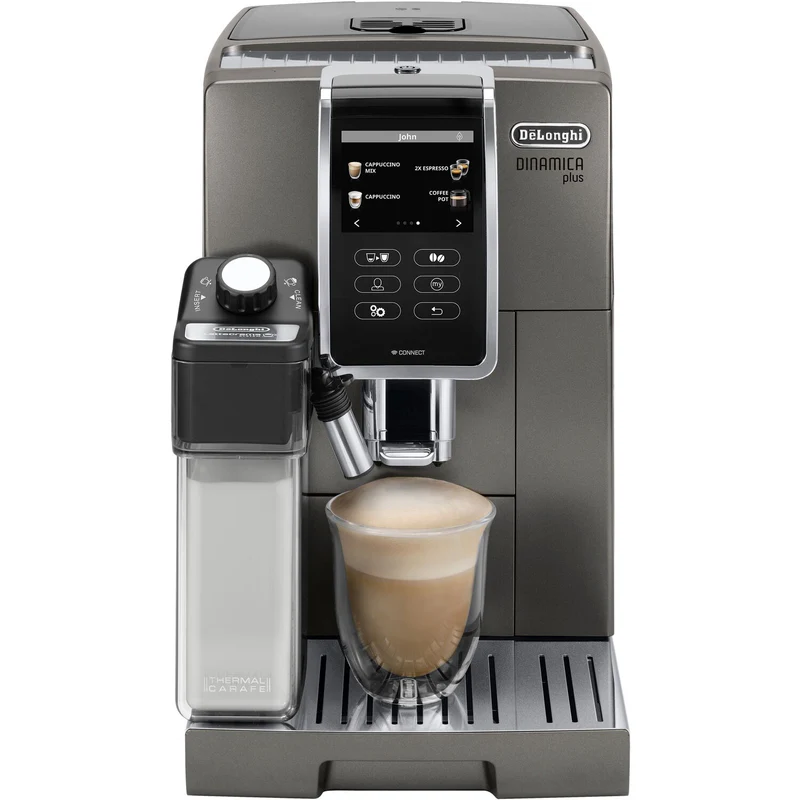
A sale headline only matters when it changes the morning behind it. The DeLonghi Dinamica Plus deal lands in that exact space for U.S. shoppers who want café-style drinks at home without learning tamping, dosing, and milk steaming by trial and error. The official U.S. product page currently lists the machine at $1,299.95, down from a $1,499.95 suggested price, and also shows $1,299.95 as its lowest price in the last 30 days. That does not prove every retailer’s all-time floor, but it does make the current offer worth a close look.
For anyone tracking premium kitchen deals through consumer product deal coverage, the bigger question is not “Is it cheaper?” It is “Does the machine earn the counter space?” This model promises 24 one-touch drinks, an automatic milk frother, a built-in conical burr grinder, and four user profiles. Those details sound fancy. In a real kitchen, they matter only if they reduce friction before work, after school drop-off, or during a slow Sunday breakfast.
Why the DeLonghi Dinamica Plus Sale Feels Bigger Than a Small Markdown
Premium coffee gear often drops by a modest amount and still feels overpriced. That is why this sale deserves a sober read. A $200 gap between suggested price and current price matters only if the machine replaces habits that already cost money, such as daily coffee runs, pod refills, or a half-used manual setup collecting dust beside the toaster.
The price drop changes the buying math
A fully automatic espresso machine is not an impulse buy for most households. It sits in the same mental bucket as a stand mixer, a high-end vacuum, or a grill. You buy it because the cheaper path has become annoying. Maybe the drive-through latte line eats 18 minutes every weekday. Maybe your pod machine makes coffee fast but leaves you wanting a better cappuccino.
Here is the small trap: a sale price can make a costly item feel sensible before you have checked the full cost. The Federal Trade Commission’s online shopping advice tells buyers to compare the model number, shipping, taxes, fees, and seller details before treating a deal as settled. That advice fits this category well because espresso machines often look similar across trims, colors, and bundles.
A real example helps. A shopper in Ohio may see the headline price, then discover that one seller adds a delivery fee while another includes free shipping and a better return window. The official U.S. page says this model qualifies for free shipping on orders over $40 and lists a 30-day return policy, which can shift the final choice even if another store appears cheaper at first glance.
Return rules matter more with espresso gear than they do with a sweater or phone case. You may not know how the grinder sounds in your kitchen, how tall your favorite mug sits under the spout, or whether your preferred beans behave well until the machine is on the counter. Keep the packaging during the test window. That one boring move protects you if the romance fades after four mornings.
Lowest price still needs context
The phrase “lowest sale price” can tempt people to rush. Slow down for one minute. On the official page, the clearest verified claim is the lowest price during the last 30 days, not a confirmed lifetime low across every U.S. retailer. That distinction protects you from buying out of panic.
The counterintuitive part is that a deal can be strong without being historic. If the machine is already on your shortlist, a current official low can be enough. If you are new to automatic coffee makers, the sale should start your research, not end it.
This is where a buyer’s checklist beats a countdown timer. Confirm the exact model, ECAM38085SB, then compare warranty terms, return rules, and what comes in the box. If a retailer hides those details behind vague product copy, that is a reason to pause. A good sale should make the decision easier, not foggier.
There is another detail buyers miss: timing. Summer sale events, holiday promos, and private email codes can stack in odd ways. If the current price matches your budget and the seller terms are strong, waiting for a mythical extra drop may cost more in wasted time than it saves in dollars. If your budget is tight, patience is still the smarter play.
What You Actually Get for the Money
The strongest case for this machine is not that it can make many drinks. Plenty of machines list a long menu. The stronger case is that the core parts work together: grinder, brew unit, milk system, screen, and profiles. When those pieces fit your routine, the machine feels less like a gadget and more like a kitchen appliance with a job.
One-touch drinks help only when the menu stays useful
De’Longhi says this model offers 24 one-touch recipes, including familiar drinks like espresso, cappuccino, flat white, and latte, plus less common options such as cortado and café con leche. The official page also lists coffee drinks, milk drinks, cold coffee, hot water, and a coffee pot option.
That range sounds broad, but the hidden value is repeatability. In a family kitchen in Phoenix, one person may want an Americano at 6:20 a.m., another may want a latte at 7:45, and a guest may ask for a cappuccino after dinner. A home espresso setup wins when it handles those shifts without making every person learn the machine from scratch.
The menu also helps when your taste changes by season. In July, iced coffee may get more use than a flat white. In December, cappuccino and hot milk drinks may move to the front of the routine. Machines that feel worth the money tend to survive those shifts because they do not depend on one perfect drink.
The non-obvious insight is that more drink choices can make a machine worse if the screen buries the few drinks you use. This model tries to solve that with a Smart One-Touch system that recognizes preferences and lists frequent drinks first. That is not glamorous, but it may matter more than the total recipe count on a sleepy Monday.
A good touch screen should disappear into the habit. You press, rinse, drink, and leave. If you are tapping through menus like a hotel thermostat, the machine has missed the point. That is why the interface deserves as much attention as the pump or grinder.
Milk texture is the real test for latte drinkers
Black coffee drinkers judge a machine by grind, dose, and cup strength. Latte drinkers are harsher, even when they do not say it out loud. Thin foam makes the drink feel like warm milk with coffee. Overblown foam turns a latte into a bubble bath.
The automatic milk frother is the feature that will make or break this machine for many buyers. De’Longhi’s LatteCrema Hot system is built to texture dairy and milk alternatives, with three froth settings for lighter, creamier, or denser foam. The milk carafe can also be stored in the refrigerator between uses.
That fridge detail sounds small until you live with the machine. A removable carafe means you do not have to pour milk back and forth every morning. For oat milk households, that can be the difference between using the machine daily and giving up after the first week.
Milk systems also create the biggest cleaning burden in many espresso routines. The official page points to removable and dishwasher-safe parts, which is the kind of feature that sounds plain but supports long-term use. A machine that makes a good latte but punishes you afterward will lose its spot fast.
One more practical note: milk alternatives vary. Almond milk can run thin. Some oat milks foam well, others collapse before the cup reaches the table. The automatic milk frother gives you settings, but the carton still matters. Buy one barista-style milk and one regular milk during the first week, then keep the winner.
How It Fits a Real American Kitchen
Counter space is where beautiful appliances go to be judged. A machine can have a smart screen and a long drink list, but if it blocks the cabinet door or crowds the air fryer, it becomes a problem. The Dinamica line is not tiny, yet its footprint is easier to plan around than many wide semi-automatic setups.
Size, water, and beans matter after day three
The official specifications list dimensions of 16.9 by 9.3 by 13.7 inches, a product weight of 21.74 pounds, a 60.87-ounce water container, a 250-gram bean hopper, and a 15-bar pump. Those figures tell you more about daily use than any lifestyle photo.
The narrow width helps on apartment counters, but depth is the number to measure first. In a Dallas kitchen with upper cabinets, a 16.9-inch-deep appliance can still fit, yet you need room to access water, beans, and the drip tray. Tape the footprint on your counter before buying. It looks silly. It works.
A larger water tank does not mean you never refill it. Milk drinks use rinsing cycles, and multiple morning coffees can drain the tank faster than expected. The hidden win is not endless capacity. It is fewer interruptions during the part of the day when everyone is already moving too fast.
Placement affects whether that benefit holds. Put the machine near the sink if you can. A long walk with a water tank feels harmless on day one and annoying by day nine. If the kitchen has stone counters, add a thin mat under the appliance so small drips do not become a daily wipe-down chore.
Profiles are more useful than they sound
Four user profiles can sound like a showroom feature. In practice, they solve a household argument. One person likes a smaller, stronger espresso. Another wants a taller coffee. Someone else wants less foam, while a weekend guest wants the default settings left alone.
The machine supports four unique user profiles, and Amazon’s product listing also describes profile-based drink priority and custom access for household use. That matters because shared machines often fail for social reasons, not technical ones. People stop using them when every cup requires undoing someone else’s settings.
A home espresso setup should feel personal without becoming fussy. Profiles help because they remove tiny daily decisions. The best appliance is often the one that asks less from you after the novelty fades.
This matters for guests too. If your parents visit from Florida or your sister stays for a week, you can let them use a simple profile without wrecking your own settings. That sounds minor until you have rebuilt your favorite drink three times because someone wanted a larger cup.
Who Should Buy It, Wait, or Skip It
A sale can make the wrong machine look right. This is the part where the honest answer matters. This model is best for people who want bean-to-cup convenience, milk drinks, and repeatable settings. It is not the best fit for someone who enjoys manual espresso as a hobby. The dividing line is simple: choose automation when you want a dependable cup before the day starts, and choose manual gear when the process itself is part of the pleasure.
Buy it if convenience is the point
If you want café-style drinks with low effort, this machine makes sense. It grinds beans, brews, handles milk texture, and guides you through the touch display. The screen is a 3.5-inch TFT full-touch color display with soft-touch buttons, designed to help users customize recipes without digging through a confusing control panel.
The ideal buyer is a U.S. household that already spends on coffee outside the home. A couple buying four or five milk drinks a week may feel the benefit faster than someone who drinks plain drip coffee. The savings are not automatic, though. You still need beans, milk, filters, cleaning supplies, and a place to keep the machine.
Think about your actual cup, not your fantasy cup. If you tell yourself you will start drinking cappuccinos every day because the machine can make them, that is weak math. If you already order lattes, Americanos, and espresso drinks, the sale is speaking to a real habit.
That is the quiet truth. The machine does not save money because it exists. It saves money only when you use it often enough to replace a habit.
It may also save something less obvious: decision fatigue. No app order, no parking lot, no tip screen, no guessing whether the coffee shop line wraps around the building. For some buyers, that convenience is the whole point.
Wait if you want manual control or a cheaper path
Skip or wait if you want to learn puck prep, tamp pressure, extraction timing, and manual steaming. A semi-automatic machine may suit that itch better. The Dinamica approach is about results with fewer steps, not full barista control.
You should also wait if the sale price still strains the budget. There is no shame in that. A premium espresso maker should make mornings better, not turn every cup into a reminder that you spent too much.
For a lower-cost path, compare it against a grinder plus manual machine, a moka pot plus milk frother, or a smaller automatic model. Read our guide to choosing coffee gear for small kitchens and our breakdown of smart kitchen upgrades that earn their space before treating any single sale as the only smart move.
There is also a middle buyer who should wait for clarity rather than a deeper discount. That person wants automatic brewing but cannot decide between this model, a connected version, and a newer machine in the same brand family. If that is you, write down the three drinks you make most and compare only the features that affect those drinks. Ignore the rest.
Conclusion
The best coffee appliance is not always the one with the longest feature list. It is the one that matches your patience, your counter, and your morning pace. This sale is worth attention because the machine brings together one-touch drinks, stored preferences, a built-in grinder, and milk handling in a way that can replace a coffee shop habit for the right household.
Still, the price deserves a calm read. The official U.S. page supports a current $1,299.95 sale and a lowest-in-30-days claim, but smart shoppers should still compare final checkout totals and seller terms. The DeLonghi Dinamica Plus makes the most sense when convenience is the goal and daily use is likely. It is a smart buy for the household that wants the same strong cup with less morning negotiation.
Buy it because it fits your routine, not because a sale banner tells you to hurry. Measure your counter, check the model number, and decide whether better mornings are worth the spend.
Frequently Asked Questions
Is this machine worth buying at the current sale price?
It can be worth buying if you already want a premium automatic machine and make milk drinks often. The sale helps, but the better test is daily use. If it replaces café trips several times a week, the value becomes easier to defend.
What makes a fully automatic espresso machine different from a semi-automatic one?
A fully automatic espresso machine handles grinding, brewing, and often milk preparation with much less user input. A semi-automatic model gives you more control over dosing, tamping, and extraction. Convenience favors automatic machines. Hobby control favors semi-automatic machines.
Does the automatic milk frother work with oat milk?
The brand says its milk system textures milk alternatives as well as dairy milk. Results can vary by oat milk brand because fat, sugar, and stabilizers affect foam. Barista-style oat milk usually performs better than thin refrigerated cartons made for cereal.
How much counter space should I plan for?
Plan for more than the listed footprint. You need space behind and above the machine for access, plus room near the front for cups and drip tray handling. Measure depth first, because that is where many kitchen counters feel tight.
Can multiple people save their own drink settings?
Yes, the machine is designed with four user profiles. That helps households where people like different cup sizes, strengths, and milk textures. Profiles are useful because they reduce the need to reset preferences before every drink.
Is it good for someone switching from coffee pods?
Yes, especially if the goal is fresher beans and more drink variety. The learning curve is still there, but it is much smaller than with manual espresso. Expect more cleaning than a pod machine, but also more control over taste.
What should I check before buying from a retailer?
Check the exact model number, final price after tax and shipping, return window, warranty terms, and whether the seller is authorized. Similar names can hide different trims. A lower sticker price is less attractive if returns are harder or support is weaker.
Who should skip this sale?
Skip it if you drink only basic drip coffee, have no counter space, or want hands-on espresso control. It may also be wrong if the price creates stress. A good machine should improve the routine, not make the first cup feel guilty.