
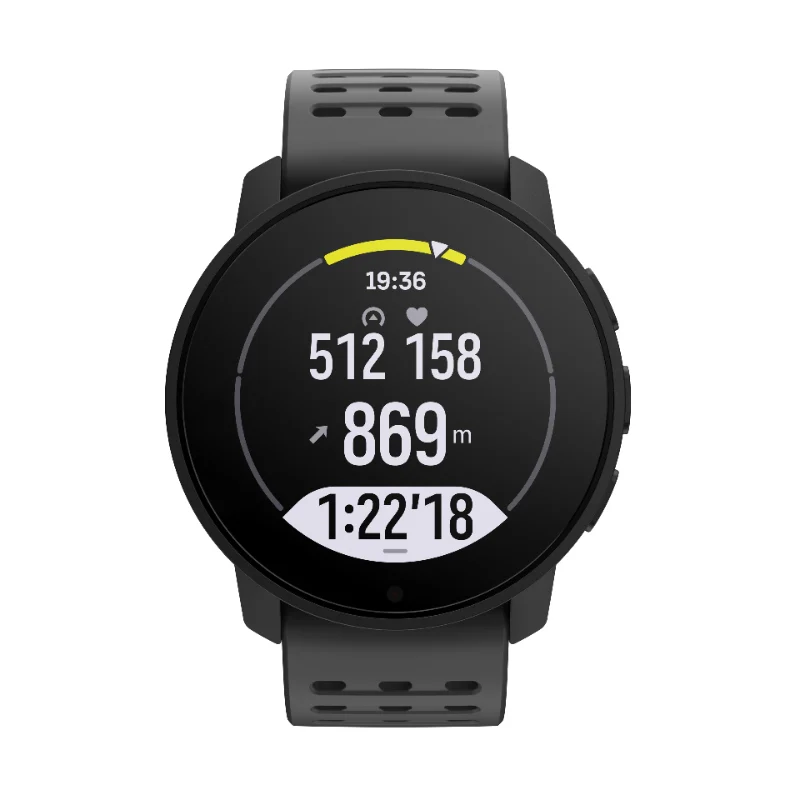
A long run changes how you judge gear. After hour six, small irritations grow teeth, and the watch on your wrist either fades into the background or starts picking a fight. That is where the ultra running watch conversation around the Suunto 9 Peak Pro makes sense. It is not the loudest pick in the watch aisle, and that may be part of the pull. Many American trail runners want battery confidence, clean navigation, a case that can take abuse, and a screen that does not turn training into menu wrestling. The Suunto 9 Peak Pro answers that intent with up to 40 hours in its best GPS mode, 100-meter water resistance, and a build that uses sapphire glass with stainless steel or titanium on selected versions. For runners comparing gear before a 50K, a mountain 100, or a long desert training block, endurance gear coverage often starts with one hard question: will this thing stay useful when the day gets messy?
Why This Ultra Running Watch Fits Real Trail Miles
The appeal starts with restraint. A lot of sport tech tries to impress you before it helps you, which is fine on a sales page and annoying on a ridge at dusk. The Suunto 9 Peak Pro feels aimed at runners who would rather have calm tools than a wrist full of noise. That matters more in ultra distance than it does in a short neighborhood run.
Battery life matters most when your pace falls apart
Battery talk can sound dull until you are twelve miles from the finish and your watch begins to panic. Suunto lists up to 40 hours in best GPS mode for this model, with longer modes available when you accept less detail. For a U.S. runner signed up for the Javelina Jundred, Rocky Raccoon, or a long unsupported day in the White Mountains, that range is not trivia. It shapes how you plan aid stations, power banks, and route checks.
The non-obvious part is that the longest setting is not always the smartest one. Many runners assume more hours equals a better setup. On technical trails, a cleaner track can matter more than a massive reserve. If you are training on switchbacks outside Boulder or moving through tree cover in the Pacific Northwest, a low-detail mode may save battery while giving you a track that looks less useful later.
That is why this watch works best for runners who plan. Use stronger GPS for races where pacing and distance matter, then save the longer modes for hikes, fastpacking, or backup tracking. The best watch is not the one with the biggest claim. It is the one that lets you pick the right compromise before your legs get tired.
There is also a mental side to battery life. When your watch still shows enough charge late in a race, you make calmer choices. You are less tempted to stop tracking, turn off features you wanted, or check the battery every mile. That calm has value. It keeps your head on food, feet, weather, and the next climb.
A smaller case can be a serious endurance feature
Large watches look powerful in photos, yet they can feel clumsy on narrow wrists. The Suunto 9 Peak Pro has a 43mm case listed by reviewers and product pages, which helps explain why many runners notice its low-profile feel. That smaller feel is not a style footnote. It can change how often you notice the watch during climbs, pole work, and jacket changes.
Think about a cold morning at the Leadville Trail 100. You may start with gloves, a wind shell, and a pack strap sitting close to your wrist. A bulky watch can snag when you check splits or pull sleeves over your hand. A slimmer GPS watch does not make you faster, but it removes one more rub point from a day already full of them.
The counterintuitive lesson is that comfort is a performance feature. Runners love to talk about sensors and maps, yet the watch you stop feeling is often the one you trust longer. A trail running watch has to survive mud and weather, yes, but it also has to stay out of your way while your form gets sloppy.
For some runners, that may matter more than another screen of metrics. Small discomfort gets louder during long mileage. A strap that pinches at mile five may feel unbearable at mile sixty. A case that bumps your wrist bone on steep descents can turn into a constant distraction. Endurance gear should earn silence.
GPS, Navigation, and the Kind of Accuracy Runners Actually Need
Accuracy is not a single thing. A road runner may care about mile splits matching a certified course. An ultra runner may care more about staying on the correct trail after a confusing junction. The Suunto 9 Peak Pro sits in that second world, where navigation confidence often beats laboratory perfection.
Route guidance helps when trail signs fail
The official user guide says you can navigate a route or point of interest while recording exercise, and it notes that choosing a route can move GPS accuracy to the best setting when needed. That is the kind of detail that matters on American trails, where markings can be great at mile three and vague at mile twenty-seven.
A practical example: you are running a self-made loop in the Ozarks after a storm. Leaves cover the tread, and two forest road crossings look almost identical. A breadcrumb route will not replace judgment, but it gives you a second opinion before you burn time on the wrong spur. That can save a race rehearsal or an entire weekend plan.
Still, a watch should not become your only safety net. Load the route, study the course, and carry your phone or a paper cue sheet when the route is remote. The quiet truth is that navigation tech works best for runners who already know how to be mildly skeptical of it.
For training content, this is also where internal planning helps. A runner building a trail season can pair route practice with a GPS watch buying checklist and a TERNAL-URL)long run fueling guide instead of treating gear as a separate topic. Watches, food, shoes, and pacing all meet on the same trail.
Perfect-looking data is not always better data
A clean GPS track can make a run look tidy after the fact, but trail running is not tidy. Canyons, heavy trees, wet sleeves, and steep grades all create strange readings. The useful question is not whether any watch can make every mile look perfect. It cannot. The better question is whether the watch gives you enough truth to make decisions while moving.
This is where the Suunto 9 Peak Pro has a strong use case as a trail running watch. It gives you route tools, sport modes, and battery choices without asking you to treat the screen like a cockpit. Suunto also lists more than 95 sport modes, which helps if your week mixes running, hiking, cycling, strength work, a095search3
The surprising part is that less obsession can lead to better training. If you stare at every tiny pace shift on rocky climbs, you may start racing the watch instead of reading the ground. Ultra runners often improve when they use data as a guardrail, not a leash. Keep the track. Check the climb. Then look up.
That approach suits American trail running because terrain changes fast. One mile in Moab can be smooth dirt, the next can be ledges and sand. One mile in the Adirondacks can feel runnable, the next can turn into roots, rocks, and wet boards. A watch can record the day, but your eyes still have the final vote.
Build Quality, Weather, and Daily Wear Between Race Days
A watch built for ultras still has to live through normal weeks. It gets knocked on door frames, worn into grocery stores, charged half-awake before work, and rinsed after sweaty runs. That daily life matters because most runners are not racing every weekend. They are building fitness in ordinary pockets of time.
Tough materials help when training is not gentle
Suunto lists sapphire glass and stainless steel, with titanium used in selected versions, plus 100-meter water r095search4 Those details are easy to skim past, but they speak to the runner who trains in four seasons. Rain, creek crossings, sweat, dust, and accidental bumps are normal. Fragile gear does not last long in a real trail bag.
Picture a runner in western North Carolina finishing a humid summer climb, then rinsing mud off the watch under a sink at a trailhead bathroom. A polished lifestyle watch may survive that, but it can feel out of place. A mountain-ready GPS watch should invite that kind of use without making you baby it.
The non-obvious tradeoff is that tough materials do not make a watch indestructible. Sapphire resists scratches better than softer glass, yet bezels can still mark, straps can wear, and salt from sweat can punish charging contacts. Rinse it. Dry it. Treat the charger like part of your kit, not a random cable buried under a car seat.
There is pride in worn gear, but there is also laziness dressed as toughness. If you run coastal trails near San Diego or humid loops in Georgia, salt and grit build up quickly. A thirty-second rinse can protect a watch better than a dramatic product spec. Care is not precious. It is how good gear stays good.
The best race watch is often the one you wear all week
Training quality comes from patterns, not heroic race-day settings. If a watch feels awkward at work, during sleep, or on easy runs, you may stop wearing it between key sessions. Then your data turns into scattered snapshots. That weakens the story your training log tells.
The Suunto 9 Peak Pro has an advantage here because it does not scream for attention. It can pass as a clean everyday watch, especially compared with bulkier outdoor models. That matters for runners who want one device for weekday office hours, evening hill repeats, and Saturday trail time. Fewer swaps mean fewer gaps.
There is a deeper point hiding here. A watch that looks modest may support more consistent training than one loaded with features you admire but avoid wearing. The best gear earns trust through repeat use, not through one impressive spec. For many runners, that is where Suunto makes its case.
Sleep tracking, daily wear, and recovery notes can be easy to dismiss when race fever hits. Still, most breakthroughs do not happen because one run was heroic. They happen because you string together enough healthy weeks. A watch that stays on your wrist through those ordinary days can become part of the training habit, not an accessory saved for big outings.
How U.S. Runners Should Decide Before Buying
Popularity can be useful, but it can also push you toward the wrong purchase. A watch getting attention in trail groups is not automatically the right watch for your wrist, race calendar, or patience level. Before buying, you should match the Suunto 9 Peak Pro to the kind of running you do most, not the version of yourself you imagine during sign-up season.
Match the watch to your race distance and terrain
For a first 50K, the battery headroom may feel generous. For a mountain 100, you need to think harder about GPS mode, charging habits, aid station timing, and whether you will use navigation for long stretches. This is where a clear pre-race setup matters. Do not learn battery modes at packet pickup.
A runner preparing for the Vermont 100 has different needs than someone training for technical routes in the Wasatch. The Vermont runner may care about long, steady tracking and comfort over rolling terrain. The Wasatch runner may care more about navigation checks, climb data, and screen readability while moving slowly over rough ground. Same watch. Different pressure points.
Here is the counterintuitive buying advice: do not buy for your longest fantasy race first. Buy for the training you will repeat for the next six months. If the watch handles your weekly long run, your trail workouts, your recovery days, and your navigation practice, it has earned a place on race day.
A useful test is simple. Wear it for a two-hour run on familiar trail, then a four-hour run with a loaded route, then a bad-weather outing where you use gloves or wet sleeves. If the menus, strap, screen, and battery still feel sane, you have learned more than any spec chart can tell you.
Be honest about what you want from a watch app
Some runners want endless graphs. Others want a simple log, route planning, and enough feedback to spot fatigue before it becomes an injury. The Suunto app and watch ecosystem tend to appeal to runners who like a cleaner, outdoor-first feel rather than a flood of lifestyle alerts. Suunto’s support page also notes over-the-air software updates through the app, which means the watch can receive updates without a cable-base095search9
That does not mean every runner will love it. If you want bright smartwatch extras, dense third-party app features, or music-first controls, you may prefer another brand. If you want a calmer endurance tool, the Suunto 9 Peak Pro becomes more convincing.
A smart buyer reads reviews with context. CleverHiker praised the stated battery numbers but reported shorter battery life during field testing, especially with cold affecting pe95search29 That does not make the watch bad. It reminds you that official claims live in cleaner conditions than mountain mornings. Test your own setup before race day, and your watch will surprise you less.
There is no shame in wanting a watch that feels simple. Trail runners already manage blisters, stomach issues, weather swings, cutoffs, and crew mistakes. Your app should not feel like another aid station problem. If the Suunto flow matches your brain, that fit may matter more than a feature list you will never open.
Conclusion
The strongest case for this watch is not hype. It is the way it lines up with the habits of runners who spend long hours outside and do not want gear drama. The battery modes, route tools, tough materials, and calmer design all point toward a specific buyer: someone who values trust over flash. The ultra running watch label fits when the watch is treated as a planning tool, not a magic fix for poor pacing or thin race prep.
Still, the right choice depends on your trails. Test battery modes on training runs. Load routes before you need them. Wear the watch during normal days and see whether it disappears on your wrist. If it does, that tells you something useful.
For American runners moving from road miles into trail distance, the Suunto 9 Peak Pro deserves a serious look. Use it well, and it becomes less like a gadget and more like a quiet part of your race plan.
Frequently Asked Questions
Is the Suunto 9 Peak Pro good for 100-mile races?
Yes, if you plan battery settings before race day and practice charging if your finish time may stretch long. The best GPS mode is suited to many long events, but colder weather, navigation use, and screen habits can shorten real-world battery life.
How does the Suunto 9 Peak Pro compare with a Garmin watch?
It often feels calmer and more outdoor-focused, while many Garmin models offer deeper smartwatch extras and larger data menus. Runners who want clean tracking, route tools, and a slimmer case may prefer Suunto. Data-heavy athletes may lean Garmin.
Can beginners use the Suunto 9 Peak Pro for trail running?
Yes. Beginners can use it for basic tracking, route following, and training logs without mastering every menu. The key is learning GPS modes early. Practice on familiar trails first so navigation and battery choices feel natural later.
Does the Suunto 9 Peak Pro have maps?
It supports route navigation and breadcrumb-style guidance, but it is not the same as a full-color map watch. For remote runs, carry a phone map or backup navigation. The watch is best as a wrist-based route guide.
Is the Suunto 9 Peak Pro comfortable for small wrists?
Many runners like its 43mm case because it feels less bulky than larger outdoor watches. Strap fit still matters, so small-wristed runners should check return policies or try one in person before committing to a race-season purchase.
How often do you need to charge the Suunto 9 Peak Pro?
That depends on GPS use, notifications, backlight habits, temperature, and training volume. Light daily use can stretch longer, while frequent GPS workouts drain it faster. Build a charging rhythm before long weekends or races.
Is the Suunto 9 Peak Pro waterproof enough for creek crossings?
Yes, its 100-meter water resistance is enough for rain, sweat, rinsing, and normal water exposure. It is still smart to rinse off mud or salt and dry the charging contacts before placing it on the charger.
Who should skip the Suunto 9 Peak Pro?
Skip it if you want a bright smartwatch experience, music-heavy features, or full onboard maps above all else. It is better for runners who value endurance tracking, durability, route guidance, and a cleaner watch xperience.